Hero
Sinuhe
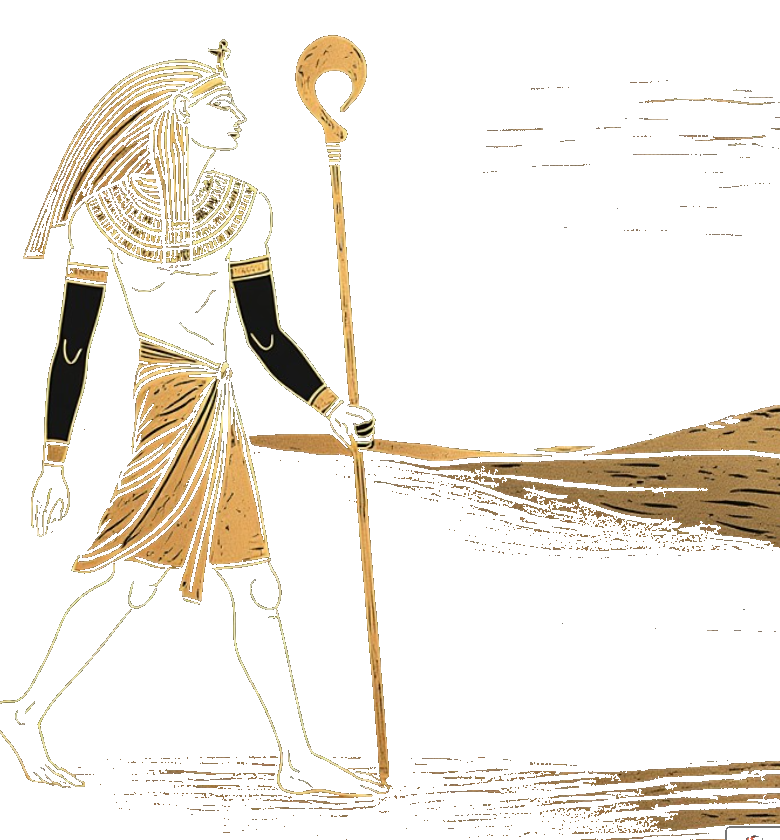
The exile who fled the throne's shadow into foreign sands.Yet Egypt called him home, and the desert released its claim.
Domains
Role
Sinuhe is the protagonist of the "Tale of Sinuhe," widely regarded as the greatest work of ancient Egyptian literature and one of the masterpieces of world literature. The story, set during the reign of Senwosret I of the Twelfth Dynasty (ca. 1950 BCE), recounts the life of a courtier who flees Egypt in panic after witnessing a political crisis — the assassination or sudden death of Amenemhat I — and spends decades in exile among the Bedouin of Syria-Palestine, where he rises to become a wealthy chieftain and military leader. Despite his success abroad, Sinuhe is consumed by longing for Egypt and eventually receives a royal pardon that allows him to return, be restored to court favor, and receive the promise of a proper Egyptian burial.
Significance
The Tale of Sinuhe is significant both as a literary achievement and as a window into Egyptian cultural values. The narrative explores themes of identity, exile, loyalty, and the overwhelming Egyptian desire for proper burial in one's homeland. Sinuhe's terror of dying in a foreign land and being buried without proper rites reflects the deep Egyptian belief that the afterlife was accessible only through the correct funerary rituals performed in Egyptian soil. The story's sophisticated narrative technique, psychological depth, and elegant prose style made it a canonical text in the Egyptian scribal curriculum, copied and studied for centuries after its composition. Multiple papyrus copies and ostraca (pottery fragments used for writing practice) have survived, testifying to its enduring popularity and its central place in Egyptian literary education.
Cult & Worship
Unlike deified figures such as Imhotep, Sinuhe was not worshipped as a god but occupied an important place in Egyptian literary culture as the archetypal hero of wisdom literature. His story was copied on papyri and ostraca by generations of scribes-in-training, serving as a model of literary style and a vehicle for transmitting cultural values. The narrative's emphasis on royal mercy, proper burial, and devotion to Egypt made it an ideal text for inculcating loyalty to the state and the king. The multiple manuscript copies that survive, including Papyrus Berlin 3022 and Papyrus Berlin 10499, span several centuries, demonstrating the tale's status as a living literary tradition rather than a static artifact.
Mythological Narratives
The Tale of Sinuhe blends historical fiction with mythological themes. Sinuhe's flight into the desert echoes the mythological pattern of exile and return found in divine narratives, particularly the story of the "Distant Goddess" who flees Egypt and must be coaxed back. His combat with a champion warrior in Syria-Palestine has parallels to the heroic combat motif found across Near Eastern literature. The climactic moment of the story — Sinuhe's return to Egypt and his reception by the king and royal children — is described in terms that evoke resurrection and rebirth: he is stripped of his foreign clothing, washed, anointed, and dressed in fine linen, transformed from a weathered desert nomad back into a civilized Egyptian courtier. This transformation mirrors the ritual preparation of the mummy and the deceased's restoration to wholeness in the afterlife.
Symbols & Attributes
Sources & References
- The Oxford History of Ancient Egypt (2000)
- Ancient Egypt: Anatomy of a Civilization (2006)