Hero
Wenamun
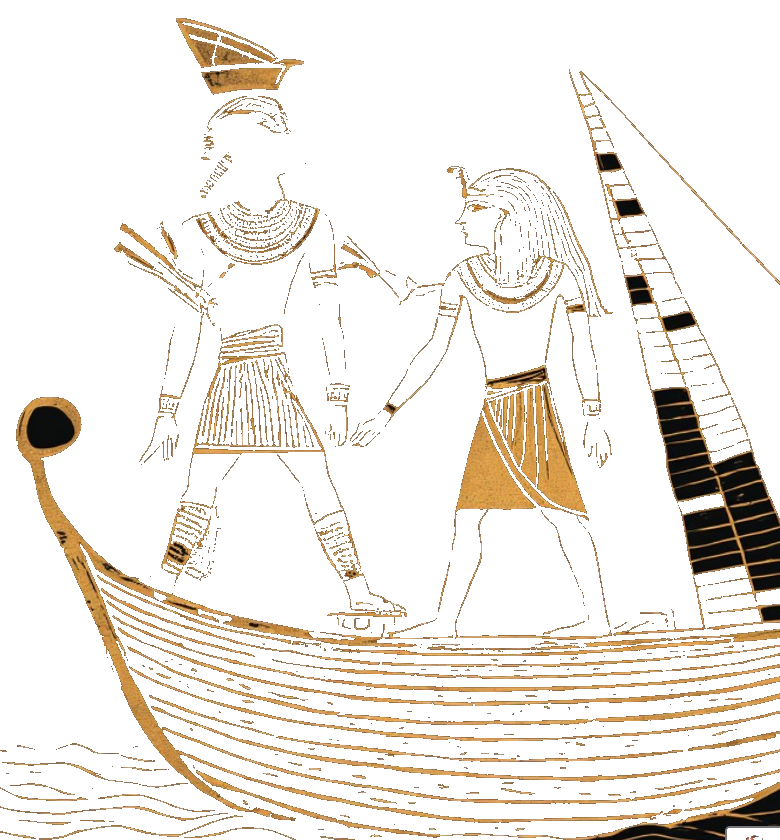
Envoy upon troubled waters, bearing the god's mission to foreign shores.His journey maps the twilight of an empire's reach.
Domains

Role
Wenamun is the protagonist of the "Report of Wenamun," a Late Egyptian literary text dating to the late Twentieth or early Twenty-first Dynasty (ca. 1075 BCE) that recounts the misadventures of an Egyptian temple official sent to the Levantine port of Byblos to purchase cedar timber for the sacred bark of Amun at Karnak. The narrative, preserved on Papyrus Moscow 120, follows Wenamun as he is robbed, humiliated, delayed, and treated with barely concealed contempt by the Levantine rulers he encounters, providing a vivid portrait of Egypt's diminished international prestige at the end of the New Kingdom.
Significance
The Report of Wenamun is invaluable both as literature and as a historical document. It provides the most detailed surviving Egyptian account of international commerce and diplomacy in the eastern Mediterranean during the late Bronze Age to early Iron Age transition. The contrast between Wenamun's invocation of Egypt's past greatness and the reality of his powerless position creates a tone of ironic pathos that is unique in Egyptian literature. The ruler of Byblos, Zakar-Baal, bluntly informs Wenamun that Egypt no longer commands the respect it once did, demanding payment in advance rather than accepting the traditional deference shown to Egyptian envoys. This literary honesty about Egyptian decline makes the text an extraordinary exception to the typically self-aggrandizing conventions of Egyptian royal and official literature.
Historical Context
The Report of Wenamun reflects the political fragmentation of Egypt during the Third Intermediate Period, when the country was divided between the Tanite pharaohs of the Twenty-first Dynasty in Lower Egypt and the High Priests of Amun at Thebes in Upper Egypt. Wenamun is sent by the High Priest Herihor, indicating that the Theban theocracy maintained independent diplomatic contacts. The text's detailed descriptions of Levantine ports, commercial practices, and political dynamics provide crucial evidence for understanding the eastern Mediterranean world during a poorly documented transitional period. Whether the Report is a factual account, a literary fiction, or a fictionalized version of real events remains debated among scholars, but its value as a source for late New Kingdom and Third Intermediate Period history is universally acknowledged.
Mythological Narratives
While the Report of Wenamun is primarily a narrative of human events, divine intervention plays a significant role. Wenamun carries a portable cult image called "Amun-of-the-Road" as divine protection for his journey, and at a critical moment when Zakar-Baal is about to dismiss him, a young man at the Byblite court falls into an ecstatic prophetic trance, declaring that the god demands Wenamun be received and his mission fulfilled. This episode represents one of the earliest descriptions of ecstatic prophecy in Near Eastern literature and demonstrates the Egyptian belief that divine will could manifest through unexpected human vessels. The narrative's unresolved ending — the surviving papyrus breaks off as Wenamun is storm-driven to Cyprus — leaves the hero's fate unknown, adding to the text's literary power and its haunting portrait of a world in transition.
Symbols & Attributes
Sources & References
- The Oxford History of Ancient Egypt (2000)
- Ancient Egypt: Anatomy of a Civilization (2006)