Location
Field of Reeds
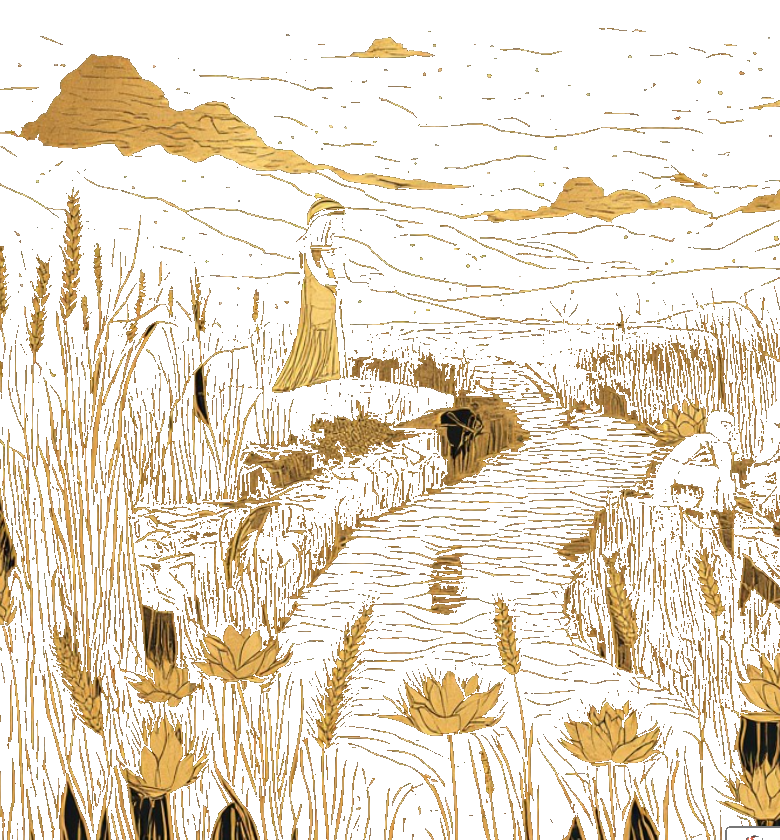
Paradise beyond the western horizon, where the blessed dead live forever.Eternal fields of plenty, where every harvest is golden and no labor wearies.
Domains
Description
The Field of Reeds (Egyptian Sekhet-Aaru or Aaru) is the Egyptian paradise, the final destination of the justified dead who have successfully passed the judgment of Osiris. It is described as an idealized version of the Nile Valley — lush, fertile fields where the grain grows impossibly tall, the rivers flow with abundance, and the blessed dead enjoy an eternal existence of comfort, pleasure, and reunion with their loved ones. Vignettes in the Book of the Dead depict the deceased plowing, sowing, and harvesting in these celestial fields.
Significance
The Field of Reeds represents the culmination of Egyptian afterlife theology — the reward for a life lived in accordance with Ma'at and a successful passage through the judgment of the dead. It is located in the east of the sky, in the realm of Osiris, and can be reached only by those whose hearts are found pure in the weighing ceremony. The concept of a fertile, agricultural paradise reflects the deeply agrarian nature of Egyptian civilization, in which the annual cycle of flooding, planting, and harvest defined both material survival and spiritual meaning.
Mythological Context
Chapter 110 of the Book of the Dead, the "Spell for knowing the souls of the sacred places," includes a detailed map of the Field of Reeds showing its waterways, islands, and divisions. Small servant figurines called "ushabti" were placed in tombs to perform agricultural labor in the Field of Reeds on behalf of the deceased, reflecting the practical Egyptian concern that even paradise might require work. The "Field of Offerings" (Sekhet-Hetepet) is a related concept sometimes distinguished from or conflated with the Field of Reeds, representing the place where the deceased receives sustenance from the gods. Together, these concepts form the Egyptian vision of eternal life as a perfected continuation of earthly existence, purged of suffering and want.
Symbols & Attributes
Sources & References
- The Egyptian Book of the Dead (1972)
- Ancient Egyptian Religion (2002)