Location
Thebes
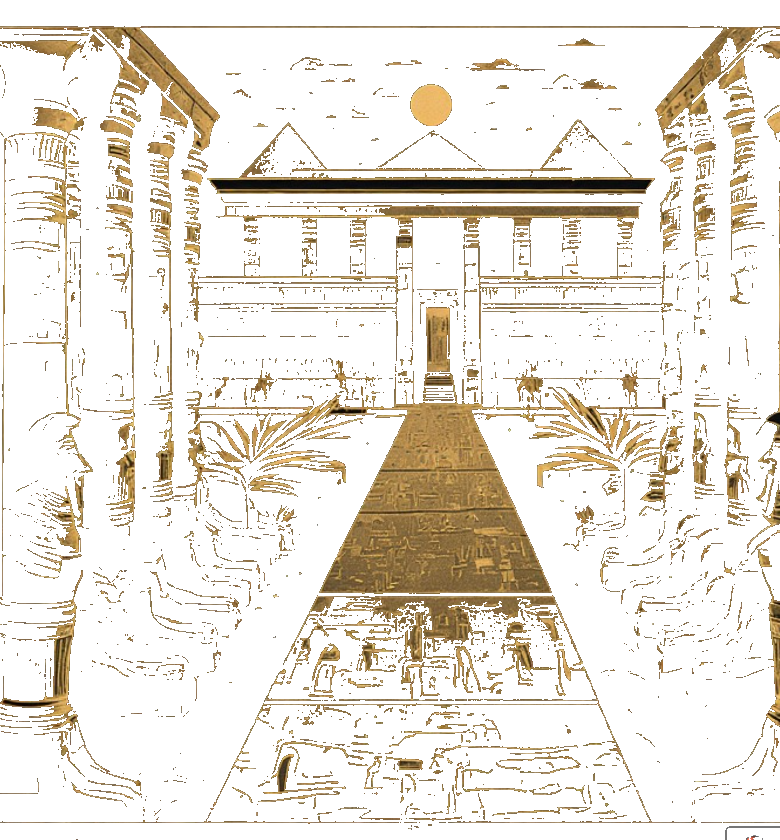
City of a hundred gates, where Amun's temple rose like a forest of stone.Capital of gods and pharaohs, its glory echoed across the ancient world.
Domains
Description
Thebes (Egyptian Waset) was the religious capital of ancient Egypt during the New Kingdom (ca. 1550-1069 BCE), home to the vast temple complexes of Karnak and Luxor on the east bank of the Nile and the royal necropolises of the Valley of the Kings and Valley of the Queens on the west bank. The city was the cult center of Amun, who was syncretized with Ra as Amun-Ra, "King of the Gods," and the wealth accumulated by the Amun priesthood at Karnak made Thebes one of the richest and most politically powerful cities in the ancient world.
Significance
Karnak temple, the largest religious complex ever built, was under continuous construction for over two thousand years, with each pharaoh adding halls, pylons, obelisks, and chapels to honor Amun-Ra and establish their own legacy. The Hypostyle Hall alone, with its 134 massive columns arranged in 16 rows, remains one of the most awe-inspiring architectural spaces in the world. Across the Nile, the Theban necropolis contains the tombs of the greatest pharaohs of the New Kingdom, including Tutankhamun, Ramesses II, and Hatshepsut, as well as the beautifully decorated tombs of the nobles that provide unparalleled insight into daily life in ancient Egypt. Homer's description of Thebes as a city of "a hundred gates" reflects its legendary status in the ancient world.
Symbols & Attributes
Sources & References
- The Oxford History of Ancient Egypt (2000)
- Ancient Egypt: Anatomy of a Civilization (2006)