Concept
Ankh
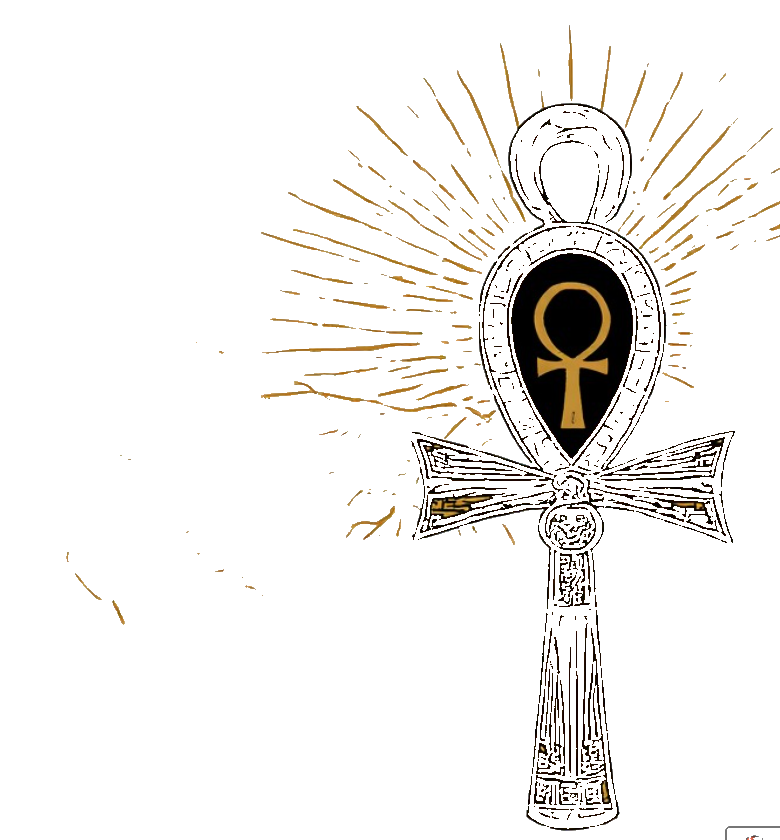
The key of life, held in the hands of every god.Its loop contains the breath of eternity; its cross, the body of the world.
Domains
Definition
The Ankh is the Egyptian hieroglyphic symbol for "life" (the word "ankh" means "life" or "to live"), and it is the single most recognizable symbol of ancient Egyptian civilization. Its shape — a looped cross with a teardrop-shaped head — appears in virtually every Egyptian temple, tomb, and piece of religious art, typically held in the hands of gods who extend it toward the pharaoh's nostrils, symbolically granting him the breath of eternal life.
Significance
The Ankh represents not merely biological life but eternal, divine life — the quality of existence that distinguishes the gods from mortals and that the blessed dead hope to achieve. Its exact origins are debated: proposed interpretations include a sandal strap, a mirror, a knot of Isis, or a stylized representation of the vertebrae. Whatever its origin, the Ankh became the universal Egyptian emblem of life, appearing in the hands of virtually every deity, incorporated into temple architecture, and worn as an amulet by the living and placed among the wrappings of the dead.
Mythological Context
In temple scenes, gods and goddesses hold the Ankh as an attribute of their divine nature, and the act of presenting the Ankh to the pharaoh signifies the transfer of divine life force. The symbol was so closely associated with divinity that during the Amarna period, rays from the Aten sun disk were depicted terminating in hands holding Ankh signs, literally raining divine life upon the royal family. The Ankh survived the end of pharaonic religion: Coptic Christians adopted a modified form as the crux ansata (handled cross), incorporating the ancient symbol of life into the new faith and ensuring its continuity into the modern era.
Symbols & Attributes
Connections
Sources & References
- The Complete Gods and Goddesses of Ancient Egypt (2003)
- Ancient Egyptian Religion (2002)