Location
Heliopolis
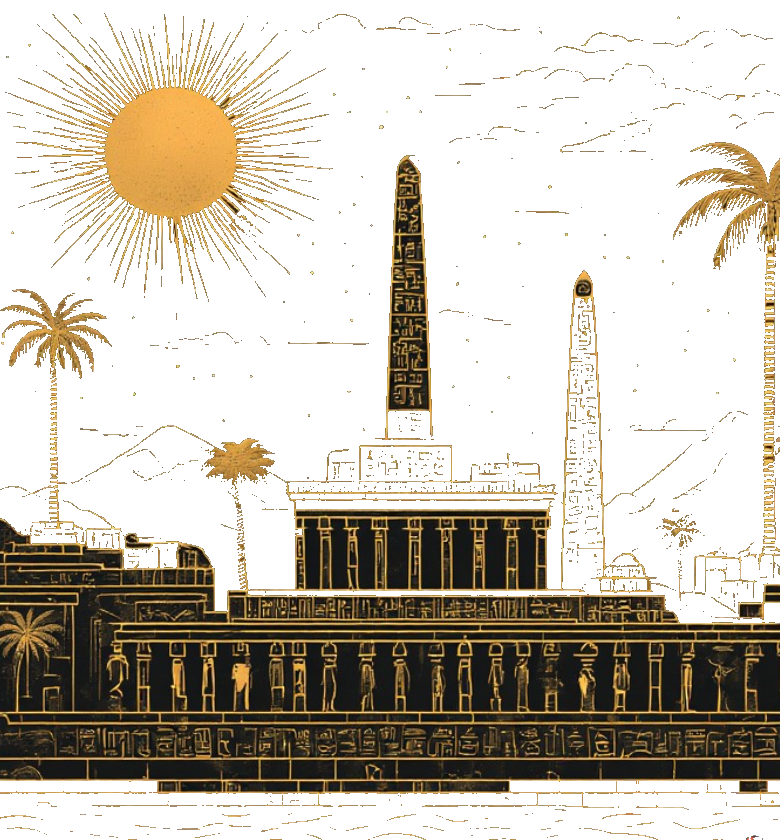
City of the sun, where the first light fell upon the primeval stone.Here the gods were born and the world received its name.
Domains
Description
Heliopolis (Egyptian Iunu, "Pillar City") was the most important center of solar theology in ancient Egypt, located at the southern tip of the Nile Delta near modern Cairo. It was the cult center of Ra-Atum and the seat of the Heliopolitan Ennead, the nine gods whose genealogy formed the most influential cosmogonic framework in Egyptian religion. The city housed the sacred benben stone, the primeval mound upon which the creator god first stood, and the great temple of Ra was among the largest religious complexes in Egypt.
Significance
Heliopolis was the intellectual and theological heart of Egyptian religion, the source of the solar theology that shaped royal ideology, funerary belief, and temple practice for three millennia. The priesthood of Heliopolis was among the most learned and prestigious in Egypt, and pharaohs from the Fifth Dynasty onward bore the title "Son of Ra" in acknowledgment of Heliopolitan theology's central importance. Almost nothing survives of the ancient city today — a single obelisk of Senwosret I stands in the modern suburb of el-Matariya — but ancient sources describe a vast complex of temples, libraries, and astronomical observation facilities that made Heliopolis the preeminent center of learning in the ancient world.
Symbols & Attributes
Connections
Sources & References
- The Oxford History of Ancient Egypt (2000)