Hero
Imhotep
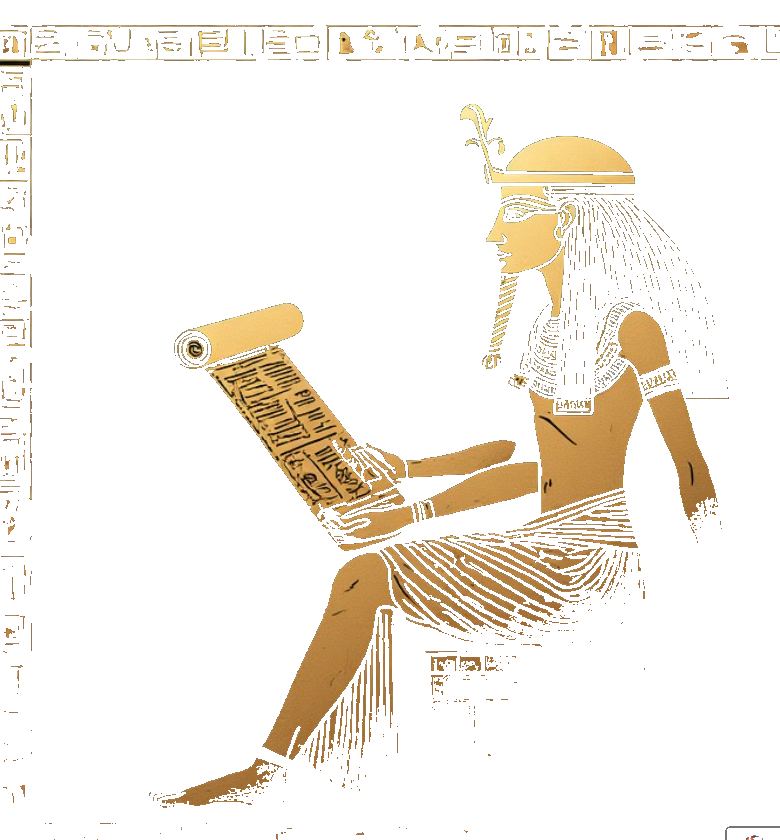
Architect of eternity, healer of flesh and stone alike.From mortal genius to divine wisdom — the one who climbed the stars.
Domains


Role
Imhotep is one of the most remarkable figures in Egyptian history: a commoner who rose to become the chief architect, physician, and vizier of the Third Dynasty pharaoh Djoser (ca. 2650 BCE), and who was eventually deified more than two thousand years after his death, becoming one of the very few non-royal Egyptians to achieve full divine status. He is credited with designing the Step Pyramid at Saqqara, the earliest monumental stone building in history, a revolutionary architectural achievement that transformed the Egyptian landscape and established the pyramid as the definitive form of royal funerary monument. His titles, preserved on a statue base from Djoser's mortuary complex, include "Chancellor of the King of Lower Egypt, First one under the King, Administrator of the Great Mansion, Hereditary Lord, High Priest of Heliopolis, Builder, Sculptor, and Maker of Stone Vases."
Significance
Imhotep's significance transcends his historical achievements: he became the embodiment of Egyptian ideals of wisdom, learning, and intellectual accomplishment. By the Late Period, he was worshipped as a god of medicine and healing, identified by the Greeks with Asclepius, and pilgrims brought offerings and prayers to his shrines seeking cures for illness. The Ptolemaic temple at Philae includes a chapel dedicated to Imhotep, and healing sanctuaries (asklepieia) associated with his cult attracted patients from across the Mediterranean world. His deification represents a profound statement about Egyptian values: that intellectual and creative genius, even in a commoner, could achieve immortality equal to that of the pharaohs. Imhotep is also credited with authorship of the "Edwin Smith Papyrus," one of the earliest known medical texts, though this attribution is likely legendary rather than historical.
Cult & Worship
Imhotep's cult grew gradually over the millennia following his death. During the New Kingdom, scribes poured a libation from their water pots before beginning work, honoring Imhotep as the patron of their craft. By the Late Period, he had been fully deified, and his principal cult center was at Saqqara, where the Step Pyramid he designed served as the focal point of his worship. A temple called the "Asklepion" at Saqqara became a major pilgrimage site for those seeking healing, and numerous bronze statuettes of Imhotep — depicted as a seated figure holding an unrolled papyrus on his lap — have been recovered from across Egypt. His cult persisted into the Ptolemaic and Roman periods, when he was syncretized with the Greek healing god Asclepius, and inscriptions in both Greek and Egyptian invoke his healing powers.
Historical Context
The historical Imhotep lived during the Third Dynasty of the Old Kingdom, a period of extraordinary architectural and administrative innovation. The Step Pyramid complex at Saqqara, his most enduring achievement, represents the first use of cut stone on a monumental scale, replacing the mud-brick and reed construction of earlier periods with limestone blocks that would endure for millennia. The complex includes not only the pyramid itself but also a series of dummy buildings, courtyards, and processional corridors that recreate the settings of royal ritual in eternal stone. Archaeological evidence for Imhotep's tomb has never been conclusively found, despite extensive searches at Saqqara, and the discovery of his burial remains one of Egyptology's great unfulfilled quests. His legacy as architect, physician, sage, and god represents the fullest realization of the Egyptian belief that wisdom and knowledge constitute the highest forms of human achievement.
Legacy
Imhotep's transformation from historical figure to deity represents one of the most dramatic cases of apotheosis in the ancient world. His influence extended beyond Egypt: the identification with Asclepius brought his healing cult into the Greco-Roman world, and his reputation as a sage and polymath made him a figure of fascination for classical writers. The "Instructions of Imhotep," a wisdom text attributed to him but now lost, was cited by later Egyptian scribes as a foundational work of the wisdom literature tradition. In modern times, Imhotep has been recognized as one of history's earliest known architects, physicians, and engineers, and his name has become synonymous with the creative genius of ancient Egyptian civilization.
Symbols & Attributes
Connections
Sources & References
- The Oxford History of Ancient Egypt (2000)
- Ancient Egypt: Anatomy of a Civilization (2006)
- The Complete Gods and Goddesses of Ancient Egypt (2003)