Concept
Ma'at
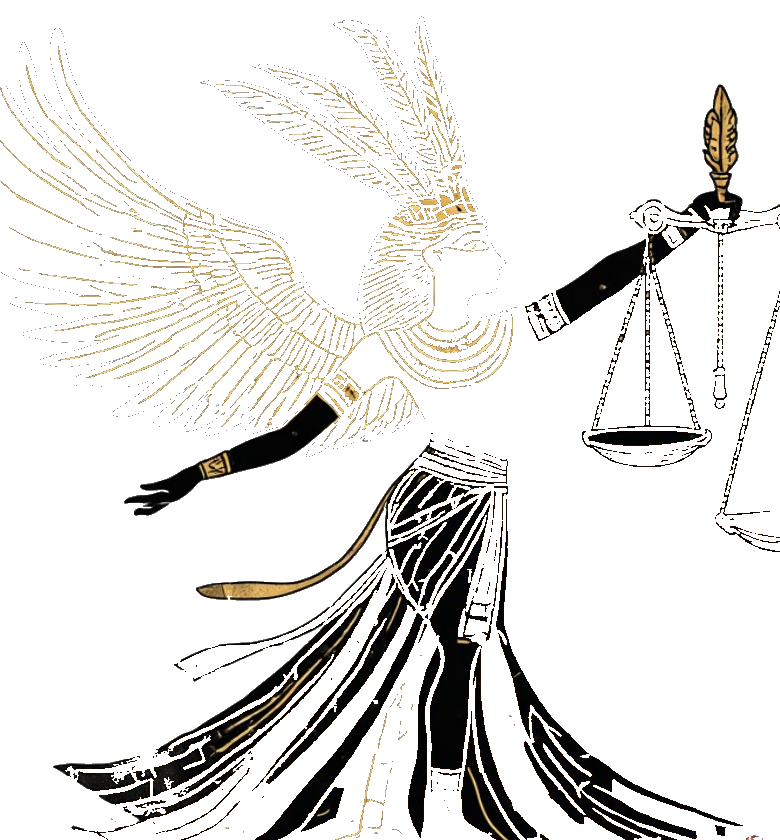
The feather against which every heart is measured.Truth, order, justice — the invisible axis upon which the cosmos turns.
Domains
Definition
Ma'at is the fundamental Egyptian concept of cosmic order, truth, justice, balance, and moral righteousness. Personified as a goddess wearing an ostrich feather on her head, Ma'at represents not merely a set of ethical rules but the very structure of reality — the principle that makes existence possible and prevents the cosmos from dissolving back into primordial chaos. Every pharaoh was charged with "establishing Ma'at" and "driving out isfet (disorder)," making the maintenance of cosmic order the primary theological justification for kingship.
Significance
Ma'at pervades every aspect of Egyptian civilization: it is the standard against which the dead are judged, the principle that guides royal governance, the foundation of legal proceedings, and the cosmic balance that the gods themselves maintain through their actions. The offering of Ma'at — typically depicted as a small figure of the goddess presented by the king to the gods — was the most fundamental temple ritual, symbolizing the pharaoh's fulfillment of his divine mandate. In the judgment of the dead, the deceased's heart is weighed on a scale against Ma'at's feather; a heart lighter than or equal to the feather indicates a life lived in accordance with Ma'at and earns passage to the afterlife.
Mythological Context
Ma'at was understood as the daughter of Ra, created at the beginning of the world as the organizing principle of the cosmos. The Instruction texts (wisdom literature), such as the "Instructions of Ptahhotep" and the "Instructions of Amenemope," are essentially guides to living in accordance with Ma'at, presenting ethical behavior not as arbitrary divine command but as alignment with the fundamental nature of reality. The concept of Ma'at influenced the development of the Greek concept of "dikē" (justice) and has been compared to the Hindu-Buddhist concept of "dharma," the Zoroastrian "asha," and the Chinese "dao" as parallel attempts to articulate the idea of a cosmic moral order.
Symbols & Attributes
Connections
Sources & References
- Religion in Ancient Egypt (1991)
- Conceptions of God in Ancient Egypt (1982)