Creature
Sphinx
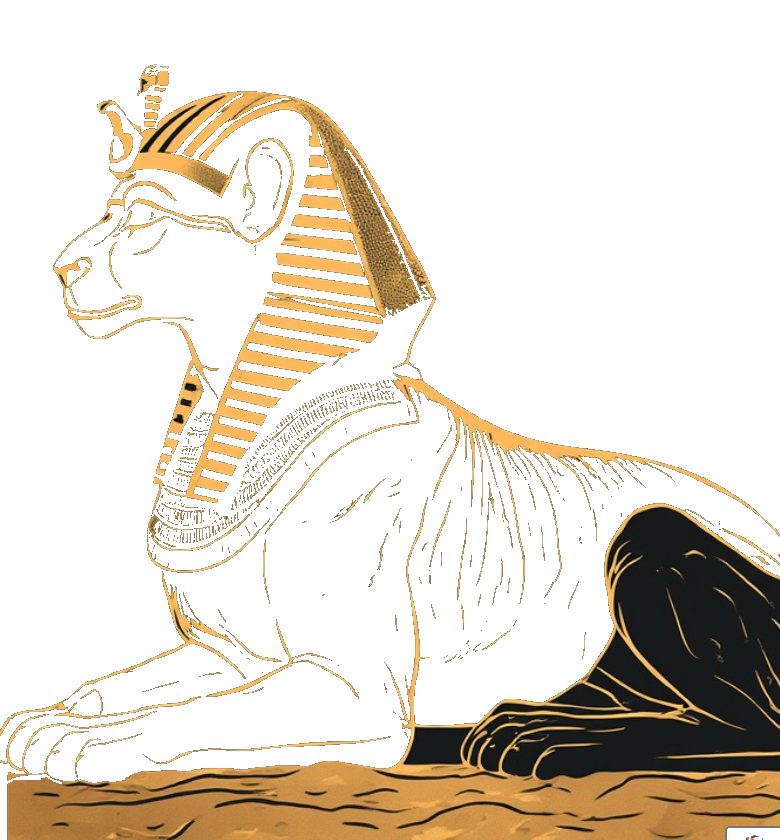
Lion-bodied, king-faced guardian at the threshold of mysteries.It watches with the patience of stone and the gaze of eternity.
Domains
Description
The sphinx is a mythological creature with the body of a lion and the head of a human, typically a king. The Great Sphinx of Giza, carved from a single limestone outcrop during the reign of Khafre (ca. 2520 BCE), is the oldest and largest known sphinx, measuring 73 meters long and 20 meters high. In Egyptian art, sphinxes served as guardian figures placed at the entrances to temples and tombs, their leonine bodies symbolizing the king's superhuman strength and their human faces representing his divine intelligence and authority.
Significance
The sphinx embodies the fusion of animal power and human intellect that characterized the Egyptian concept of kingship. Avenues of sphinxes (dromos) flanked the approaches to major temples, most famously the three-kilometer avenue connecting the temples of Karnak and Luxor at Thebes, lined with hundreds of ram-headed sphinxes sacred to Amun. The Egyptian sphinx is fundamentally different from the Greek sphinx: where the Greek sphinx is female, dangerous, and asks riddles, the Egyptian sphinx is male, protective, and represents royal power. The Egyptian concept spread throughout the ancient world, influencing Phoenician, Assyrian, and ultimately Greek artistic traditions.
Mythological Context
In Egyptian theology, the sphinx was closely associated with solar worship: the Great Sphinx at Giza faces due east, greeting the rising sun, and was later identified with the god Horemakhet ("Horus in the Horizon"). The "Dream Stela" of Thutmose IV, erected between the paws of the Great Sphinx, records the prince's dream in which the sphinx promised him the throne if he cleared the sand that was burying it — a narrative that combines royal propaganda with the sphinx's enduring mystique as a source of divine communication.
Symbols & Attributes
Connections
Sources & References
- The Oxford History of Ancient Egypt (2000)
- Ancient Egypt: Anatomy of a Civilization (2006)