Deity
Nephthys
coptic Nephthusegyptian Nebt-Het
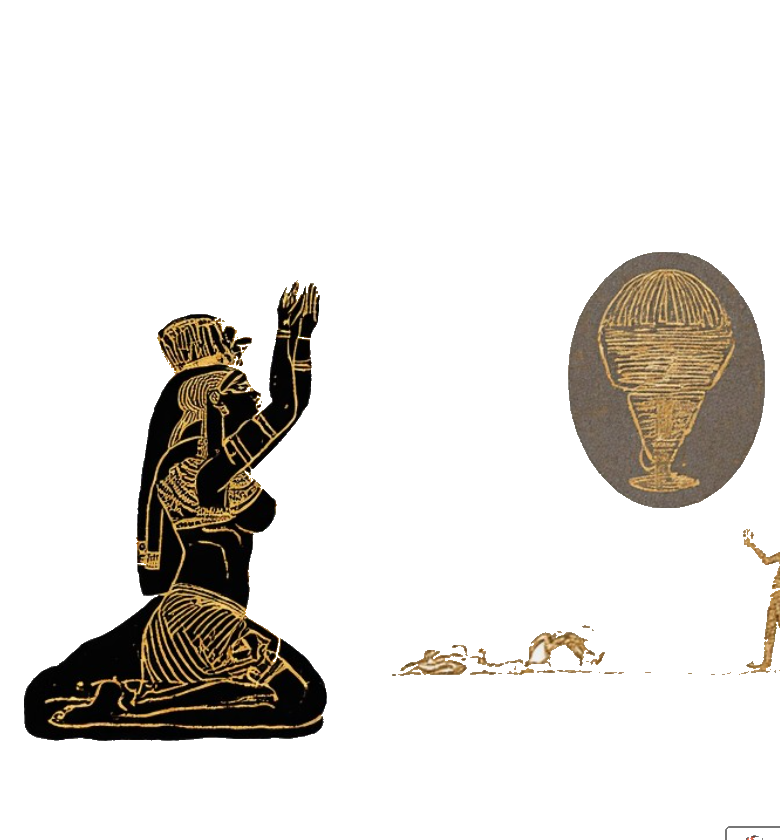
Shadow sister, mourner at the margins, keeper of the spaces between.Where Isis restores, Nephthys watches — the dark twin who guards the threshold.
Domains
Role
Nephthys is the goddess of mourning, night, darkness, the desert edge, and funerary rites, the sister of Isis, Osiris, and Set, and the mother of Anubis. Her Egyptian name "Nebt-Het" means "Lady of the House" or "Lady of the Temple Enclosure," though paradoxically she is associated more with liminal spaces and boundaries than with domestic interiors. She stands as the complementary counterpart to Isis: where Isis represents the fertile, cultivated Nile Valley, Nephthys represents the barren but protective desert that flanks it. In funerary contexts, the two sisters always appear together as the divine mourners, positioned at the head and foot of the bier, their lamentations providing the ritual framework for proper burial and resurrection.
Significance
Nephthys's theological significance lies in her embodiment of necessary darkness and protective liminality. She is not a goddess of evil or destruction but of the essential boundaries that define and protect sacred space. Her association with Set as his consort places her at the intersection of order and chaos, yet her loyalty lies with Osiris and Isis, making her the figure who bridges the opposing cosmic forces. The "Lamentations of Isis and Nephthys," a liturgical text performed during the Khoiak festival at Abydos, preserves the ritual mourning speeches of the two sisters over the body of Osiris, demonstrating their complementary roles in the resurrection process. Nephthys was also associated with beer and intoxication, particularly in her capacity as a comforter and soother of grief.
Cult & Worship
Unlike most major deities, Nephthys did not possess a principal cult center of her own, instead being worshipped alongside Isis, Osiris, and Anubis at their respective temples. This absence of an independent cult has led some scholars to characterize her as a purely theological construct, a necessary complement to Isis rather than an independently worshipped deity. However, evidence from the Ptolemaic and Roman periods indicates that Nephthys received independent offerings and invocations, particularly in funerary and magical contexts. She was frequently invoked in protective spells, especially those guarding the canopic jars that held the mummified organs of the deceased, where she protected the jar of Hapy (containing the lungs) alongside the three other protective goddesses: Isis, Neith, and Serqet.
Mythological Narratives
Nephthys plays a crucial role in the Osiris myth cycle as the loyal sister who abandons her husband Set to aid Isis in recovering and restoring the body of Osiris. In one tradition, she conceives Anubis through a union with Osiris, whom she seduces by disguising herself as Isis — a narrative that explains both Anubis's parentage and Nephthys's complex position between the warring factions of the divine family. In funerary texts, Nephthys transforms into a kite bird alongside Isis, and the two sisters fly over the body of Osiris, fanning him with their wings and calling him back to life with their cries. This image of the two mourning kites became one of the most enduring motifs in Egyptian funerary art, appearing on coffins, tomb walls, and papyri from the Old Kingdom through the Roman period, a visual expression of the eternal vigilance with which the divine sisters guard the dead.
Symbols & Attributes
Connections
Sources & References
- The Complete Gods and Goddesses of Ancient Egypt (2003)
- The Routledge Dictionary of Egyptian Gods and Goddesses (2005)
- The Egyptian Book of the Dead (1972)