Deity
Set
greek Typhonegyptian Setesh
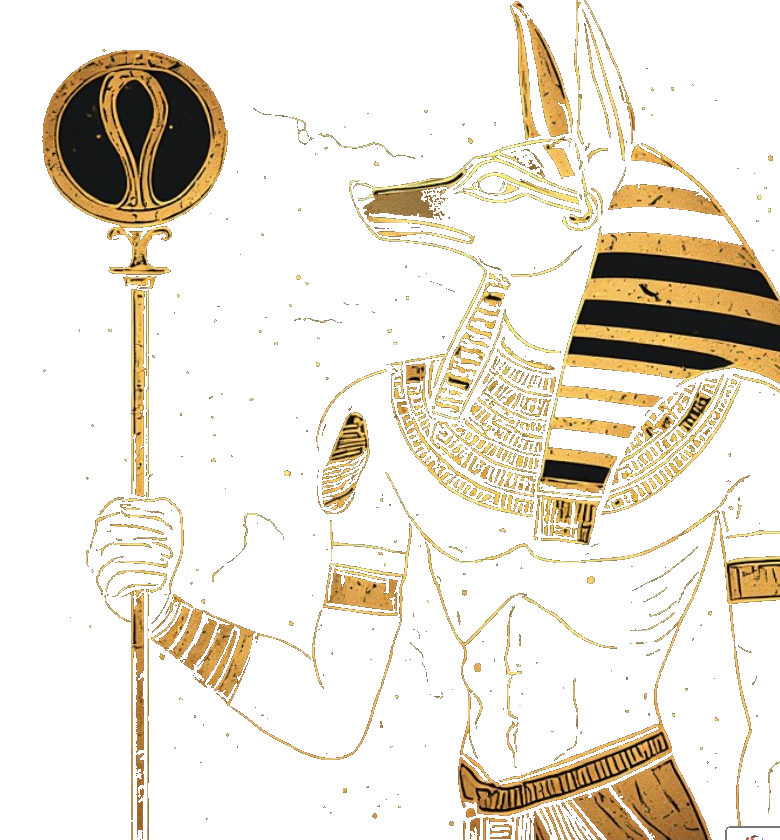
Red lord of the desert storm, breaker of boundaries, slayer of his brother.Chaos wears his face, yet even chaos serves a purpose in the bark of Ra.
Domains
Role
Set is the god of chaos, storms, the desert, violence, and foreigners, and one of the most theologically complex deities in the Egyptian pantheon. He is the son of Geb and Nut, brother of Osiris, Isis, and Nephthys, and the murderer of Osiris — the act that defines his mythological identity and sets in motion the central drama of Egyptian religion. Yet Set is not simply an evil figure: in earlier periods of Egyptian history, he was a necessary and valued member of the divine order, the god whose tremendous strength defended Ra's solar bark against the chaos serpent Apophis each night. His ambiguous nature reflects the Egyptian understanding that chaos, while dangerous, is an integral component of the cosmos that must be managed rather than eliminated.
Significance
Set's theological role shifted dramatically across Egyptian history, serving as a barometer of political and cultural change. During the Old Kingdom, Set was a respected member of the pantheon, paired with Horus as the "Two Lords" (nebwy) whose balanced opposition represented the unity of Upper and Lower Egypt. The Nineteenth Dynasty pharaoh Seti I ("Man of Set") and his grandson Ramesses II both honored Set as a patron deity, and the Ramesside capital of Pi-Ramesses in the eastern Delta included a quarter dedicated to Set. However, from the Late Period onward, particularly during and after the foreign dominations that Egypt endured, Set became increasingly demonized, identified with foreign oppressors and equated with the forces of cosmic evil. By the Ptolemaic and Roman periods, Set had become essentially a devil figure, his images systematically defaced in earlier temples.
Cult & Worship
Set's primary cult centers were in Upper Egypt, particularly Naqada (ancient Nubt, "Gold City") and Ombos, regions associated with the desert and the margins of the Nile Valley. The oases of the Western Desert also maintained Set cults, as these isolated communities on the edge of the habitable world fell naturally within the domain of the desert god. At Naqada, archaeological evidence for Set worship extends to the Predynastic period, suggesting that he was among the earliest worshipped deities in the Nile Valley. The "Set animal," his distinctive zoomorphic form with its curved snout, squared ears, and forked tail, has never been satisfactorily identified with any known species, making Set perhaps the only major Egyptian deity whose sacred animal remains zoologically unidentified. Some scholars have proposed connections to the aardvark, the okapi, or a now-extinct canid, while others suggest the animal was always purely mythological.
Mythological Narratives
Set's most famous mythological role is as the murderer and dismemberer of Osiris, an act variously motivated by jealousy, ambition, or cosmic necessity depending on the source. In the "Contendings of Horus and Set," Set employs both physical violence and sexual aggression in his contest with his nephew Horus for the kingship, engaging in episodes that include an attempted sexual assault and the famous "lettuce incident." Despite his characterization as violent and transgressive, Set also appears as the essential defender of cosmic order in the solar mythology: standing at the prow of Ra's bark, he is the only god strong enough to repel the chaos serpent Apophis, using his iron spear to drive back the embodiment of non-existence. This paradox — the god of chaos fighting the ultimate force of chaos — captures the Egyptian understanding that Set's destructive power could be harnessed in service of Ma'at.
Symbols & Attributes
Connections
Featured in
The Osiris Myth
The murder of Osiris by his brother Set, his resurrection by Isis, and the birth of Horus who would avenge his father and claim the throne.
deathresurrectionkingshipbetrayal
The Contendings of Horus and Set
The eighty-year legal and physical battle between Horus and Set before the divine tribunal for the throne of Egypt.
cosmic-battlekingshipjustice
Isis and the Seven Scorpions
Isis, fleeing with the infant Horus, is aided by seven scorpions who punish a woman who refused her shelter and heal a child stung in retaliation.
magicjusticeprotection
Sources & References
- The Complete Gods and Goddesses of Ancient Egypt (2003)
- The Routledge Dictionary of Egyptian Gods and Goddesses (2005)
- Egyptian Mythology: A Guide to the Gods, Goddesses, and Traditions (2004)